
How Technology Interferes With Connection (and how therapy can help)
There are days when it feels like we wake up and immediately fall into the glow of a screen. Before our brain is fully awake we are checking notifications, tapping through stories, browsing headlines, or opening group chats-catching up on what we feel we missed out on while we were asleep. Then we move through our day with a phone always within reach. We stand on the train holding onto the rail with one hand and holding our entire digital world with the other. By the time we climb into bed at night we are still scrolling, still searching, still consuming. It can feel like the entire day has been lived through a screen from morning to night.
Our phones give us access to everything. They help us stay connected to our friends. They help us learn new skills, plan trips, and navigate the city we live in. They help us find the hottest restaurants, stay updated on breaking news, and explore new neighborhoods we would never normally stumble across. With a few taps we can book a last minute table for two, find the quickest route across town, or fall into a two hour rabbit hole about a new hobby we just discovered. Our phone makes the world feel huge and right at our fingertips at the same time.
And yet there is a cost to all of this connection.
I see so many young adults in my therapy practice who are overstimulated with screens
For young adults, especially people in their 20s and 30s trying to build careers, friendships, relationships, and some sense of self, being chronically online can feel both comforting and exhausting. Our phone helps us stay plugged into everything, but it can also disconnect us from ourselves. It gives us endless access to information, but it also leaves us overwhelmed, overstimulated, unsure of how we even feel, and maybe even uncertain about how we should be living our lives.
If this sounds familiar, you are not alone.
Let’s talk about it.
Social Media Struggles: How Constant Exposure Creates a False Sense of Connection
In a big city, social media can feel like the glue holding everyone together. Friends are scattered across neighborhoods. People are busy. Schedules clash. Hanging out in person can be amazing, but it is not always possible. So we send each other reels, TikToks, memes, and photos just to feel close. Sometimes social media becomes the only way we know what our friends are doing. If we are not watching their stories or responding to their posts we might feel completely out of the loop or even nervous about our friends including us if we aren’t always available. While social media is the highway to connection, it also comes with pressure. It is a space filled with comparison, influence, advice, and endless highlight reels. You might see someone your age landing a new job, optimizing their 5-9 before their 9-5, running a marathon, buying a home or traveling around the world for the second time this year. Meanwhile you are simply trying to get yourself through the day.
When you are constantly exposed to other people’s curated lives it becomes incredibly easy to lose sight of your own reality. The comparison sneaks up on you. You might not even realize it is happening until you notice that tight feeling in your chest or that anxious itch to level up your life in a way that does not actually make sense for you.
Feelings That Come Up With Constant Social Media Exposure That We Talk About in Therapy
The emotional fallout from being always online is real.
Some of the most common feelings around online fallout can include:
Doom and gloom.
Constant exposure to negative news can make the world feel scarier than it actually is. It can make you feel like you can’t plan ahead or enjoy the moment because who knows what will happen if the world is burning. You see the breaking news headline and immediately go to that hopeless place.Anxiety.
Notifications, comparisons, and endless information keep your nervous system in a near constant state of alert.Decreased self esteem.
When you watch everyone else appear successful, aesthetic, or effortlessly put together, it becomes hard not to judge yourself.Insecurity.
Social media pulls you into a cycle of wondering if you are doing enough or living a life that measures up.Fear of missing out.
Being a 20/30 something already has enough FOMO. Social media adds a second layer. It makes it feel like everyone is out doing something more fun, more valuable, or more meaningful than you.
If any of these feelings show up for you, that does not mean you are doing anything wrong. It simply means your brain is reacting to an environment that was never designed to be consumed for hours a day.
Truth is…your life isn’t in shambles, your screen time is just too high!
So let’s talk about how to move forward and find balance in a chronically online world.
Feelings Check In: A Therapist-Approved Approach
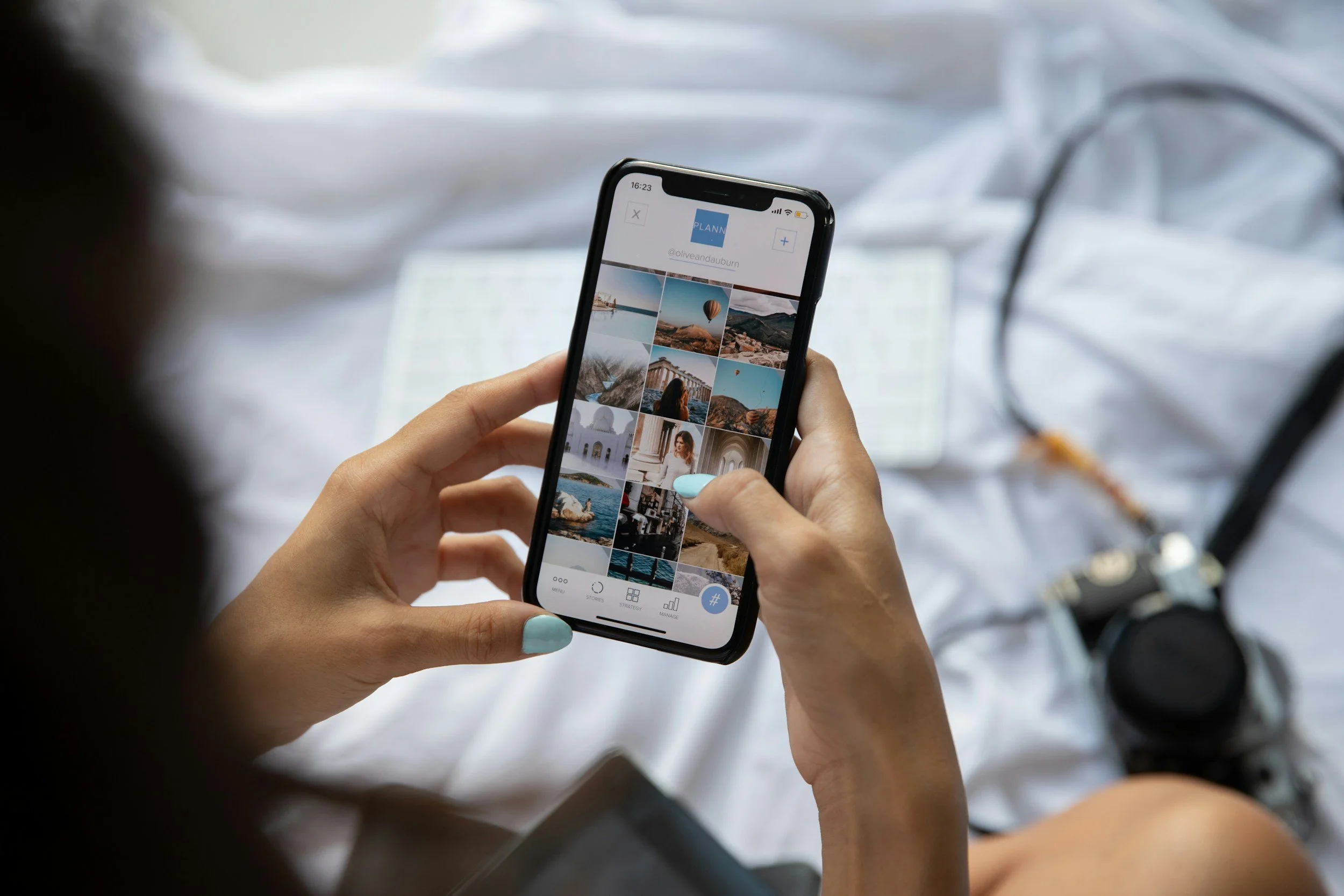
How often do you notice your scrolling and don’t even remember picking up your phone? Maybe you’ve found yourself scrolling for hours and when you finally put your phone down you feel consumed by anxiety or existential dread?
Taking a moment to do a feelings check in at any point in your scrolling process can be incredibly beneficial.
Before picking up your phone to scroll, take the following steps to build awareness of how you are feeling:
Start with a simple pause.
Ask yourself: What emotion am I feeling right now?
Maybe you are bored.
Maybe you are anxious.
Maybe you are lonely, tired, overstimulated, or looking for distraction.
Our phones can absolutely be sources of connection and entertainment, but they can also pull us away from understanding ourselves and our real needs. That is why checking in matters.
Next, notice how your body feels when you scroll.
Do your shoulders tense up?
Do your eyes feel tired?
Is there tightness in your chest?
Do you feel heavier or more drained after 10 minutes online?
Your body often reacts before your mind does. The physical sensations you notice can be early warning signs that the content you are consuming is affecting you more than you realize.
Then explore what emotions come up as you scroll.
Curiosity, anxiety, insecurity, excitement, FOMO, hopelessness when reading the news, joy when you see a friend post something fun.
All of these emotions provide clues.
Checking in with yourself helps you figure out what you need in the moment.
Maybe you need connection rather than scrolling. Maybe you need rest. Maybe you need quiet. Maybe you need to talk to someone. Maybe you just need a five minute break.
Pausing interrupts autopilot mode. It invites you to be intentional instead of reactive. And that shift creates a sense of agency in your daily life.
Taking Small Breaks from Screen Time Gives your Brain a Break
When everything from your friendships to your calendar exists online, completely unplugging can feel impossible. And honestly, it probably is not realistic for most of us. The goal is not to abandon your phone. The goal is to take small, intentional breaks that remind your brain what it feels like to be offline and grounded.
A break can be as simple as ten minutes.
Or an hour.
Or the time it takes to walk around the block.
Or even the time it takes to walk from one side of your apartment to the other.
It is okay to start small!
You can even use tools to help. Some people set app limits before bed. Others use physical devices like a Brick phone or timers that make it harder to bypass the limit and fall back into scrolling.
These small breaks create breathing room. They help quiet the noise so your mind can reset.

Create an Offline Part of Your Day
Think about adding one or two offline habits into your daily routine. This could be something tiny, but the impact is real.
Some ideas for generating new, healthy habits vs the screen:
Listen to the news without watching a screen.
Make breakfast without checking notifications.
Take a walk around the block.
Work out without scrolling between sets.
Read a book at a cafe.
Do diamond art or coloring.
Visit a local coffee shop and people watch instead of scrolling.
Journal before bed.
Spend time on hobbies that do not involve technology.
Socialize in person even if it is just sitting on a bench with a friend.
And then, after you do it, take a moment to notice how you feel.
Do you feel calmer?
More clear minded?
More like yourself?
Reflection reinforces the benefits and makes it easier to keep choosing offline moments in the future.
Curate Your Social Feed to Foster Intention
Have you ever opened your phone to quickly watch a funny video and suddenly you are knee deep in scary news updates or spiraling because someone posted something that hit an insecurity you were not expecting? That experience is common and overwhelming.
One helpful strategy is to curate your feed with intention. Follow accounts that align with your interests or lift your mood. Create boundaries around what you expose yourself to. You don’t necessarily have to block or unfollow accounts that make you feel anxious or compare yourself to others, you can take a step back and mute them and check in on your terms, when you are in the headspace to connect with their content.
There are so many ways to curate your social media feeds to ensure you protect your mental health:
Some people even make separate accounts.
One for close friends and personal connections.
One for news.
One for hobbies or creative interests.
This helps you scroll with intention. You get to choose what emotional landscape you walk into when you open your phone.
Invite in Curiosity and Compassion When You Scroll
It is so easy to compare yourself to others online. You see someone’s optimized daily routine, or someone’s perfectly decorated apartment, their dream vacation, their engagement, their promotion and suddenly you feel like you are not doing enough. But remember, social media shows only a tiny snapshot of someone’s life. Not the laundry pile, the stressful days, the family drama, or the self doubt they carry behind the scenes.
The next time you feel the comparison rising, slow down and turn inward.
Slow down, take a breathe, and ask yourself:
What am I feeling at this moment?
What about this post is bringing up that feeling?
Does this reflect something I genuinely want or something I think I should want?
By slowing down and naming our emotions, we provide ourselves with information about how we feel and have an opportunity to turn into what we need.
After turning towards yourself, turn outward with curiosity:
What is this post telling me about this person?
What might have happened after this photo or video?
What story am I assuming?
What story is this telling about their life?
The more curious you become, the more grounded you feel. Curiosity pulls you out of comparison and back into your own values and circumstances. It reminds you that someone else’s life is not a blueprint for your own.
Connect With Your People
Being online can feel both deeply connecting and deeply isolating. You might be interacting with dozens of people in a day yet still feel lonely. That is why real connection matters.
Talk to your friends about their experience online. Ask how they handle the pressure, the comparison, or the burnout. Share when you need to step back from social media so you do not feel guilty if someone expects quick responses or constant reel sharing.
Set boundaries with your friends about your online time. Let them know if you are taking a social media break, checking group chats only at certain times of day, or simply limiting your responses to DMs and posts. True friends will understand that protecting your mental health sometimes means being less available online.
Most importantly, prioritize in-person connection. Social media is a great tool for maintaining light contact, but it cannot replace the richness of being in the same room with someone. Make an effort to schedule real-life hangouts—even if it is just a coffee date or a quick catch-up walk. These moments ground you in your present reality and remind you that you are connected to people beyond the screen.
Moving Forward
Being chronically online in a modern world is a complicated experience. It offers undeniable benefits-connection, knowledge, convenience and it comes with the cost of affects on one’s mental health.
The goal is not perfection or total abstinence. The goal is to build awareness, practice intention, and reclaim your sense of agency. By pausing, checking in with your feelings, setting small boundaries, and prioritizing real-life connection, you can learn to navigate the digital world without sacrificing your peace. You can be online without letting the internet own your entire attention.
Finding Support in Therapy: Young Adult Therapy for Anxiety
If you find yourself struggling with the stress of social media and need support building the skills to navigate its impact on your mental health and self-esteem, meeting with a therapist who truly understands these challenges can be incredibly helpful. The therapists at Compassionate Connections Wellness Center know what it’s like and can help you sort through your emotions, strengthen your self-esteem, and create a life aligned with your values—both online and in real life.
Here’s a bit how we help at Compassionate Connections: